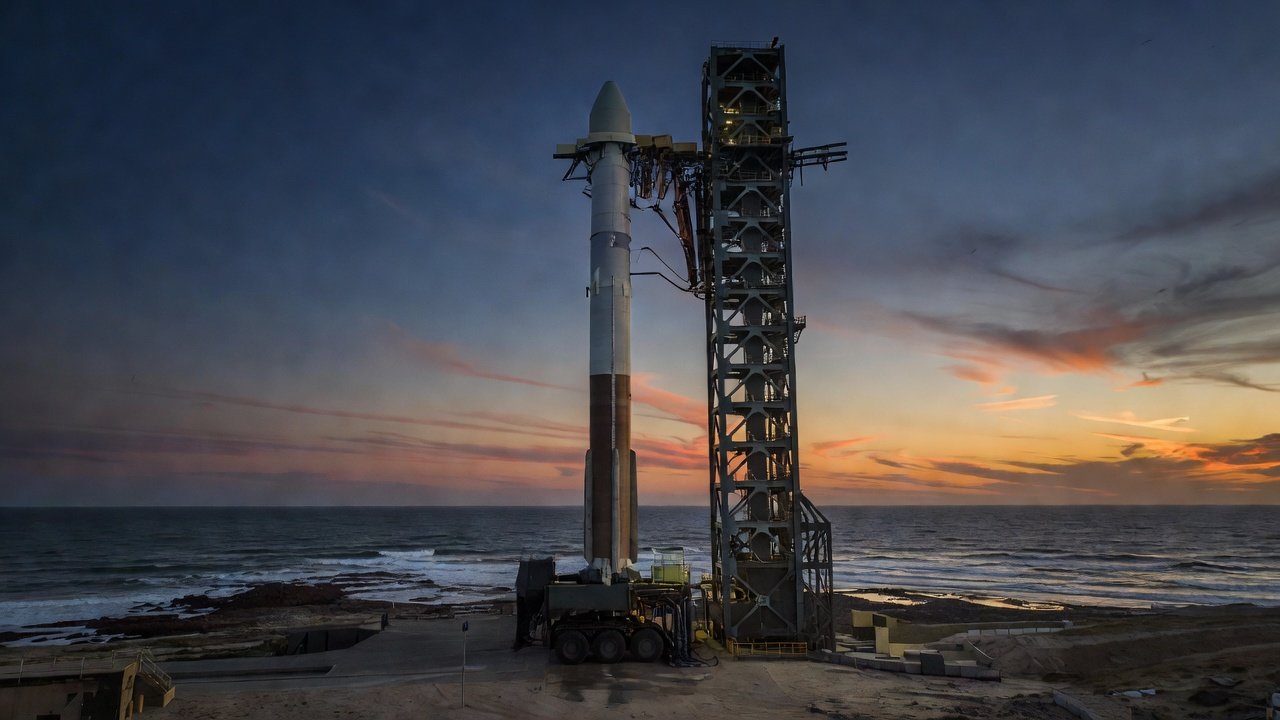
Two premises in this article’s title need updating before the arithmetic can be done, and both changed in the last eight months.
The constellation is not called Kuiper. Amazon retired the Project Kuiper name on 13 November 2025 and rebranded the constellation Amazon Leo. Launch contracts, FCC filings and ULA’s own press releases now use the new name.
The deadline moved. On 5 June 2026 the FCC waived the requirement that Amazon deploy 1,618 satellites — half the authorised 3,236-satellite constellation — by 30 July 2026, extending it to 30 July 2027. The extension is not unconditional: Amazon’s satellites operate with reduced interference protection rights in Ka-band, meaning competitors may cause interference with less regulatory recourse available to Amazon.
And a third correction, on the cadence figure itself. The 20-to-25 number was Tory Bruno’s forecast. Bruno left ULA in December 2025 for Blue Origin, and under interim CEO John Elbon the company’s stated 2026 target as of February 2026 was 18 to 22 launches — 2 to 4 Atlas V and 16 to 18 Vulcan.
The record against the forecast
ULA has a well-documented pattern of entering a year with a double-digit target and finishing well below it. The company flew six times in 2025 against prior guidance in the double digits. In an earlier year it aimed for up to ten Vulcan flights and flew one.
This is not a criticism unique to ULA — launch forecasting is optimistic across the sector — but the magnitude and consistency of the gap is what makes the 2026 target worth treating as a ceiling rather than a plan. A company that flew six times in 2025 forecasting 18–22 in 2026 is projecting a three-fold increase in a single year.
The publicly visible 2026 record through early August does not support that trajectory. ULA launched Amazon Leo 7 on an Atlas V 551 from SLC-41 on 29 May, and Leo 8 on 2 July from the same pad, with a Space Force mission announced for 12 August. Both Leo missions flew on Atlas V, not Vulcan — and Atlas V is the vehicle ULA has only 2 to 4 of in the 2026 plan, because the inventory is finite and no more are being built.
For a 16-to-18 Vulcan year, the Vulcan flights have to be happening now. They are not visible at that rate.
The backlog is the real number
ULA’s manifest exceeds 80 missions, including 47 for Amazon and 38 Vulcan flights under the Amazon contract specifically. Amazon’s total launch procurement across providers — 38 Vulcan, 18 Ariane 6, 12 New Glenn, plus Atlas V and a set of Falcon 9 missions — is worth over $7 billion and represents one of the largest commercial launch procurements ever assembled.
That backlog is simultaneously ULA’s greatest asset and the clearest statement of its problem. A manifest of 80 missions at six launches a year is a thirteen-year backlog. At 20 launches a year it is four. The difference between those two numbers is the entire question of whether ULA remains a first-tier launch provider or becomes a niche national-security operator with a commercial obligation it cannot discharge.
What Amazon’s deadline arithmetic now looks like
Amazon has roughly 330 to 375 production satellites in orbit across its completed missions as of mid-2026, using Atlas V, Falcon 9 and Ariane 6. The rebranded service entered enterprise beta on 8 April 2026 with commercial availability targeted for mid-2026.
To reach 1,618 satellites by 30 July 2027, Amazon needs on the order of 1,250 more satellites in about twelve months. At the per-launch capacities being flown — Atlas V has been delivering around 29 satellites per mission — that is an implausible number of Atlas V flights. It requires the heavy-lift vehicles, Vulcan and New Glenn, to carry the bulk at much higher per-flight satellite counts and at a cadence neither has yet demonstrated.
This is the actual coupling between the two subjects. Amazon’s regulatory position depends on Vulcan’s ramp. Vulcan’s ramp depends on production throughput — engines, solid rocket boosters, upper stages — and on pad availability at SLC-41, which Atlas V is also using for Leo missions.
The constraint nobody has fully explained
ULA’s public account of its 2025 shortfall points to a solid rocket booster anomaly on Vulcan’s second certification flight in autumn 2024, which delayed national-security certification to March 2025. That explains 2025. It does not explain the 2026 rate.
The candidate constraints for a vehicle that is certified and flying are production-side: BE-4 engine delivery from Blue Origin, SRB supply, and the rate at which ULA’s factory and integration facilities can turn out and stack vehicles. ULA has not published rate figures for any of these, and in the absence of disclosure the honest position is that the binding constraint is not publicly established.
What can be said is that a launch provider whose vehicle is certified, whose pads are available, and whose manifest is full, and which is nonetheless flying at single-digit rates, has a production problem rather than a demand problem. That is a more tractable problem than the alternative — and a slower one to fix than a schedule slip.
What would change the assessment
Vulcan flights in the second half of 2026. The 16-to-18 Vulcan target requires a launch roughly every three weeks from here. Two or three Vulcan flights before year-end would indicate a ramp beginning; a return to the 2025 rate would settle the question.
Amazon Leo satellites per Vulcan flight. The deployment arithmetic depends heavily on whether Vulcan carries substantially more satellites per flight than Atlas V’s ~29. This is the figure that determines whether the July 2027 deadline is reachable at all.
Whether the FCC waiver’s spectrum condition bites. Reduced Ka-band interference protection is a real competitive cost, and its practical effect on service quality in contested bands is the thing to watch as the constellation moves from beta to commercial operation.
A permanent CEO. ULA has been under interim leadership since December 2025. A three-fold cadence increase is a capital and organisational commitment that interim leadership is not usually positioned to make.
Sources: Spaceflight Now, “ULA sets sights on ramping up launch cadence in 2026” · Aerospace America, “ULA forecasts launching at least 20 times a year, starting in 2026” · Via Satellite, “Amazon Rebrands Project Kuiper to Amazon Leo” · ULA newsroom