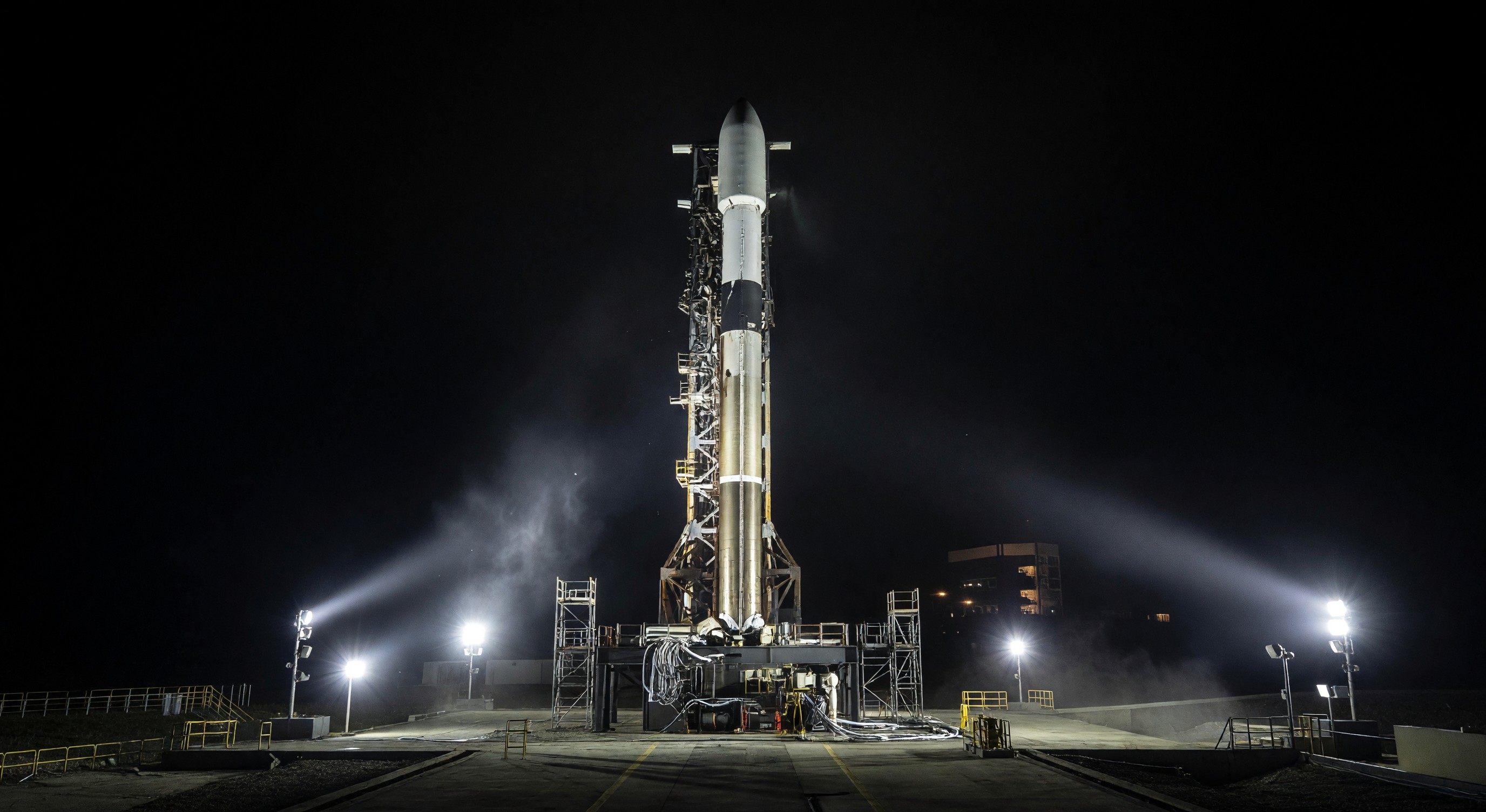
The small satellite launch market has attracted more new entrants over the past decade than almost any segment of the aerospace industry. At the peak of the entry wave, dozens of companies across the United States, Europe, Asia, and the rest of the world were developing small launch vehicles — rockets capable of delivering payloads of 150 to 500 kilograms to low Earth orbit, targeting the market for satellites too large for rideshare economics but too small to justify a dedicated medium-lift mission.
The question of how many of those programs would survive to operational service has been debated since the wave began. By 2025, the answer is becoming clearer, and it looks like what market theory would predict: a small number of operational providers, significant attrition among aspirants, and market structure defined by the competitive dynamics of rideshare versus dedicated launch.
Who Is Operational in 2025
The universe of genuinely operational small launch vehicles — vehicles that have reached orbit multiple times and have paying commercial customers — is smaller than the aspirant list of a few years ago.
Rocket Lab’s Electron remains the most commercially mature dedicated small launch vehicle outside China. The vehicle has accumulated dozens of successful flights from launch sites in New Zealand and, since the company added a Wallops Island pad, the United States. Electron’s payload capacity to low Earth orbit is approximately 300 kilograms — enough for a constellation smallsat or a cluster of smaller payloads on a dedicated mission. Rocket Lab has also developed a partially reusable variant, recovering the first stage from midair with a helicopter after parachute descent. First-stage recovery has been demonstrated on several flights, though at this point Rocket Lab operates Electron mostly in expendable mode for cost and scheduling reasons.
Rocket Lab’s position is distinctive because the company has deliberately diversified beyond launch services into spacecraft manufacturing, satellite buses, and in-orbit services. This vertical integration means Electron exists within a broader business that can sustain it even if pure launch economics are challenging — and that Electron carries the company’s own constellation payloads in addition to external customers.
China’s CAS Space and a cluster of other Chinese small launch providers have been increasingly active in the global market, though their accessibility to Western commercial customers is constrained by U.S. export control regulations and the broader geopolitical climate. The Chinese small launch market is substantial domestically.
ISRO’s Small Satellite Launch Vehicle (SSLV) has conducted flight demonstrations and positions India as an emerging small launch provider, though SSLV’s commercial customer access and pricing relative to Electron remain questions for the market to answer.
What Happened to the Rest
The list of small launch programs that announced ambitious plans but have not reached commercial service is long. Several patterns account for most of the attrition.
The rideshare competition hardened. SpaceX’s Falcon 9 rideshare program — Transporter missions that aggregate dozens of small payloads on a single launch — provides access to orbit at prices and with cadence that dedicated small launch cannot match for payloads where schedule flexibility is acceptable. A small satellite operator who can wait 12 to 18 months for the next compatible rideshare slot and can accept a sun-synchronous polar orbit at a standard inclination has limited reason to pay the premium for a dedicated small launch.
The rideshare option changed the calculus in ways that early small launch market projections underestimated. When the projection models were built, the assumption was that dedicated launch would be preferred for schedule certainty, orbital parameter control, and the ability to avoid sharing a manifested with competitor satellites. Those advantages are real — but many customers proved willing to accept rideshare constraints at sufficiently lower price.
The capital requirements were understated. Reaching operational service for a new launch vehicle requires more investment than most early-stage programs projected. The gap between a successful first flight and consistent commercial service is wider than it appears. Engine development, range infrastructure, launch site licensing, ITAR compliance infrastructure, insurance programs, and the personnel depth to sustain operations across multiple simultaneous manifest commitments all represent ongoing capital consumption that test programs do not face. Programs that underestimated total capital requirements found their runway insufficient.
Technical risks materialized. Launch vehicles fail. First flights fail at rates that aerospace history suggests are normal — roughly 50% or more of new orbital vehicles fail their inaugural attempt. Programs that failed inaugural flights and could not sustain the capital burn through multiple development iterations were forced to pause or close. The list of programs in this category is substantial.
The Structural Tension: Dedicated vs. Rideshare
The commercial viability of dedicated small launch depends on a specific market condition: enough customers who require dedicated mission profiles and can pay the price premium over rideshare.
The customers who fit this profile are real but bounded. They include:
- Operators who need orbital parameters that rideshare doesn’t offer — specific inclinations, altitudes, or local time of node that a shared manifest cannot provide
- Operators with time-sensitive requirements — a replacement satellite for a failed asset, a constellation fill that cannot wait 18 months
- Government and defense customers with mission requirements that preclude sharing a launch with commercial payloads from arbitrary third parties
- Operators with payload configurations that require environmental conditions (thermal, vibration, contamination) that rideshare cannot guarantee
Each of these customer segments is genuine, but together they do not describe a market large enough to sustain many launch providers at the economics that small vehicles require.
The structural conclusion that analysts have converged on is that the small dedicated launch market can sustain one to three providers at commercial viability in the long run, with the survivors likely being those who combine operational maturity (demonstrated by flight history) with either extreme vertical integration (like Rocket Lab) or a specific geographic or regulatory niche (government-aligned providers serving national programs).
The Defense Customer Segment
The national security small satellite market is one area where dedicated small launch has durable advantages over commercial rideshare. Defense customers often cannot use commercial rideshare for classified payloads, require specific orbital parameters that rideshare cannot accommodate, and need demonstrated ability to launch on short notice — responsive space launch capabilities that a commercial rideshare backlog cannot provide.
The U.S. Space Force has been active in developing the responsive space launch concept, with procurement programs aimed at establishing multiple small launch providers capable of launching national security payloads on short timelines. The Orbital Services Program and related Space Force procurement activities have provided contract awards to multiple small launch providers, creating a government customer base that differs structurally from commercial rideshare competition.
For small launch providers who can qualify for and win Space Force contracts, the defense customer segment provides more favorable economics than purely commercial competition. The flight rates available from defense launches alone are unlikely to sustain a provider at operational tempo, but they provide base demand that stabilizes the business case for also competing in commercial markets.
Survival Strategies for Ongoing Entrants
Programs still in development in 2025 — Rocket Lab’s Neutron (medium lift, discussed separately), ABL Space Systems, Relativity Space (which has pivoted toward medium lift), and others — face a market where the economics of pure small lift have hardened against new entrants.
The most discussed strategic adaptations are:
Moving upmarket. Several programs originally conceived as small launch vehicles have shifted aspirations toward medium lift, where the market is larger — Rocket Lab’s Neutron is one prominent example, analyzed in the Neutron development update, the rideshare competition is less complete, and national security demand is higher. Relativity Space is the most prominent example, canceling its small Terran 1 vehicle after a failed inaugural launch and pivoting entirely to the larger Terran R.
Government-guaranteed demand. Aligning program development with specific government procurement contracts — USSF, NASA, civil government agencies — provides anchor demand that reduces the commercial market risk. Programs that have won significant government development contracts have a more defensible capital position than purely commercial-financed entrants.
Geographic differentiation. Launch providers in Europe, Australia, and other regions without domestic orbital launch capability have a distinct value proposition — local access to orbit without dependence on U.S. or Chinese providers, with political and regulatory advantages for government payloads. This niche is real but small.
Frequently Asked Questions
How many small launch vehicles are currently operational?
The number of genuinely operational dedicated small launch vehicles — those with multiple orbital successes and active commercial customers — is in the low single digits globally. Rocket Lab’s Electron is the clearest Western example. The broader list of programs that have reached orbit at least once but lack consistent commercial operational service is longer.
Why has rideshare hurt dedicated small launch more than expected?
Rideshare pricing on Falcon 9 Transporter missions has been lower than early projections, and the cadence has been higher — multiple Transporter missions per year provide more schedule flexibility than the early rideshare market offered. Many customers who were projected to require dedicated launch have found rideshare acceptable at current prices and availability.
Is there a market for dedicated small launch despite rideshare?
Yes, but it is more bounded than early market projections suggested. Dedicated small launch serves customers who need specific orbital parameters, short manifest timelines, classified or defense missions, or other requirements that rideshare cannot accommodate. That market is real but not large enough to sustain many providers at commercial viability.
What happened to Relativity Space’s Terran 1?
Relativity Space launched Terran 1, its 3D-printed small launch vehicle, on an inaugural flight in March 2023. The first stage performed nominally but the second stage ignition failed, making it a failed inaugural flight. The company subsequently canceled Terran 1 and pivoted development focus entirely to Terran R, its medium-lift reusable vehicle.
How does the Space Force support small launch providers?
The Space Force has multiple procurement programs aimed at developing responsive launch capabilities using small launch vehicles. These include the Orbital Services Program and other contract mechanisms that provide government anchor customers for small launch providers. These contracts provide launch demand for national security payloads that complements commercial customer bases.
Why do some small launch programs move to medium lift?
The medium-lift market is larger, faces less complete rideshare competition, and has higher national security demand than small lift. Providers who conclude that the small lift economics are insufficient for long-term viability — particularly after encountering development costs higher than projected — pivot to larger vehicles where the addressable market justifies the investment.
Further Reading from Authoritative Sources
- FAA Office of Commercial Space Transportation — Annual Compendium of Commercial Space Transportation — the FAA publishes annual data on commercial launch activity, vehicle status, and market trends that provides the most comprehensive publicly available dataset on launch market structure.
- NASA Launch Services Program — NASA’s launch services office evaluates and certifies launch vehicles for agency payloads, with public documentation on vehicle qualification status relevant to understanding which small launch providers have established government-customer credentials.