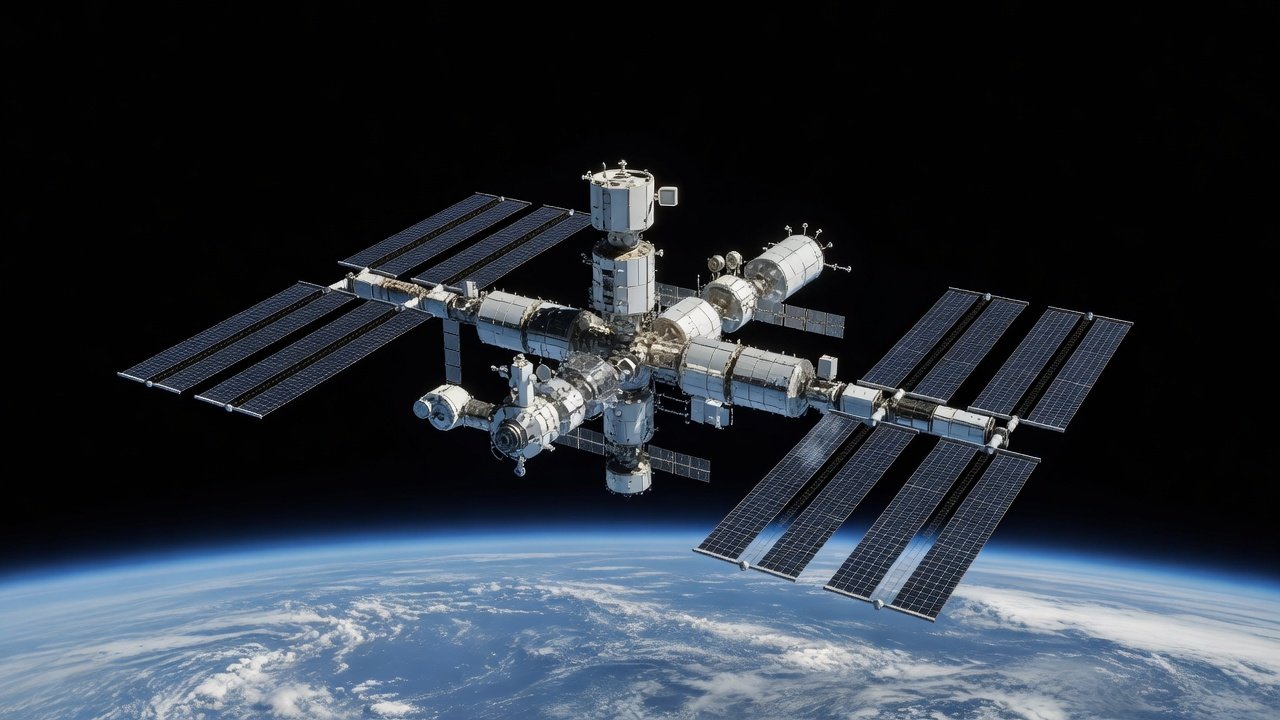
On 24 March 2026, NASA announced a strategy called Ignition, and with it a substantial change of direction for the Commercial LEO Destinations programme. The agency now intends to procure a government-owned “core” module with two docking ports, attach it to the International Space Station, and require commercial station developers to dock their modules to that core rather than build standalone free-flying platforms.
For four companies that have spent five years and, collectively, more than three billion dollars of private capital building free-flying stations, this is not a refinement. It is a change of the thing being procured.
What the previous plan was
The 2019 strategy envisaged commercially operated modules attached to the ISS and, separately, free-flying commercial stations. The 2021 update formalised this as the Commercial LEO Destinations programme and committed to the free-flyer architecture, a position reinforced by an August 2025 NASA directive.
The Phase 2 model was to be a full-and-open competition: multiple operators bidding, NASA certifying those that qualified, and the agency purchasing crew time and research accommodation as a customer rather than an owner. The intellectual lineage is Commercial Cargo and Commercial Crew — NASA buys a service, industry owns the asset, and competition constrains price.
Ignition abandons that structure at its centre. NASA will own and operate the module containing power, environmental control, life support and core infrastructure. Commercial modules dock to it. The assembled stack eventually separates from the ISS and operates independently.
The stated rationale, and the problem with it
NASA’s argument is that the commercial business case does not close and that no provider can deliver an operational capability soon enough, against an ISS decommissioning date of 2030.
The schedule concern is legitimate on its face. What makes the reasoning difficult to accept in the form presented is the funding history underneath it.
Industry received less than $600 million in total across 2020–2021 for commercial station development. For comparison, the ISS cost over $150 billion, roughly two-thirds NASA-funded. In 2024 congressional testimony, NASA was covering approximately 5% of one company’s development costs — against 80–90% coverage for the Commercial Crew vehicles that the CLD programme was explicitly modelled on. Private investment across the participants has exceeded $3 billion, a five-to-one ratio of private to public dollars.
A programme funded at 5% of development cost, which then concludes that the business case does not close, has produced a finding about its own funding level. As CSIS has argued, NASA is not observing a market that failed to materialise — NASA is the market, and it declined to behave like a customer. The historical parallel the analysis reaches for is US commercial aviation in the 1920s, where the federal government was the primary customer for air transport and airmail contracts are what allowed early airlines to close their business cases.
The counter-argument deserves a fair hearing: schedule risk against a hard 2030 deadline is real, and a government-owned core with a single contractor is a more controllable acquisition than four competing free-flyers of uncertain maturity. If the agency genuinely believes no free-flyer will be operational by 2030, restructuring is defensible even if the underfunding created the situation.
What weakens that defence is the timing question. NASA must now design, build, launch and integrate a new core module, attach it to a station already showing its age, and do this before 2030. Whatever technical difficulties the commercial operators face — life support, power, thermal, integration — are the same difficulties a core module developer will face. Changing who holds the contract does not change the physics or the schedule.
Where it leaves the four
Axiom Space was furthest along the attached-module path, with an architecture explicitly designed to berth to the ISS and later detach. Of the four, Axiom’s approach is closest to what Ignition describes, and it is the most plausible near-term beneficiary — though “your architecture is now the government’s architecture” is a mixed outcome when the government intends to own the core.
Vast has pursued the most aggressive schedule of the group with a small, quickly-fielded station. A model built on getting to orbit first and iterating is poorly served by a requirement to dock to a government module that does not yet exist.
Blue Origin’s Orbital Reef and Starlab, the Voyager-led partnership, are both large free-flyer concepts with international and commercial partners attached. Both are further from the docked-module model, and both carry partner commitments predicated on the previous architecture.
None of these companies is out of business because of Ignition. All of them now face a procurement whose shape changed after they committed capital against a different one.
The funding number to watch
A House appropriations proposal for FY2027 recommended $400 million, a level industry representatives stated would be sufficient to support two operational stations.
That figure is the most informative number in the entire discussion, because it is small. Four hundred million dollars is not a large line item in NASA’s budget, and the claim that it would sustain two providers suggests the gap between the failed business case and a working one was never enormous. It was, on this evidence, a few hundred million dollars a year of committed demand — roughly what the agency spends on a mid-sized science mission.
The risk nobody controls
The ISS is old, and it has a known and monitored air leak in the Russian segment. NASA’s plan now depends on attaching a new module to that station and operating the combination long enough to build out commercial modules around it.
If the ISS must be decommissioned earlier than 2030 — and the leak is the most-cited mechanism by which that could happen — the Ignition architecture loses the structure it was designed to attach to, at a point when the free-flying alternatives will have had four years of reduced investment and redirected engineering. That is a single-point dependency created by a decision intended to reduce risk.
The version of this that ends well is one where the core module is procured quickly, the commercial modules are funded at something closer to Commercial Crew ratios, and the assembly stays ahead of the ISS’s condition. The version that ends badly is a gap in continuous US human presence in low Earth orbit — which is the outcome the entire programme existed to prevent.
Sources: CSIS, “NASA Changes Course on Commercial Space Stations” · SpaceNews, “NASA proposes new strategy for commercial space stations” · Wikipedia, Commercial LEO Destinations program