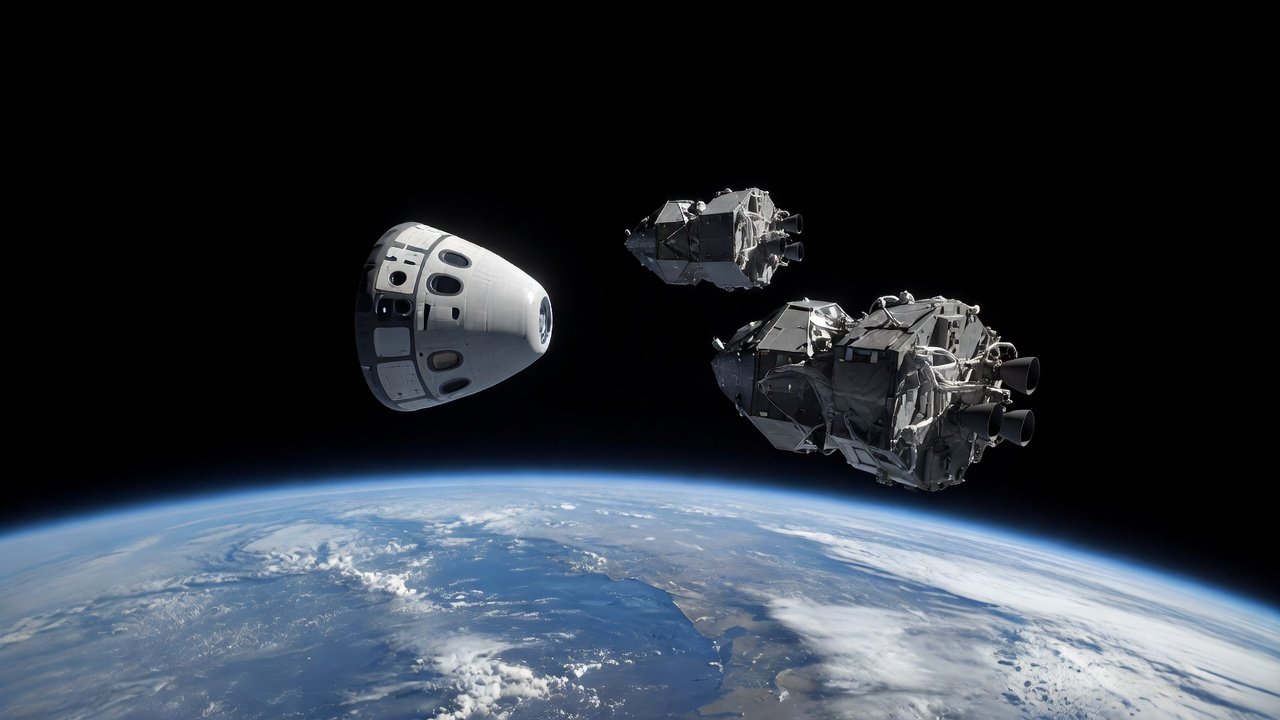
NASA named the Artemis III crew on June 9, 2026, at Johnson Space Center, and the roster says as much about the mission as the press release does. Randy Bresnik will command, ESA’s Luca Parmitano will serve as pilot, and Frank Rubio and Andre Douglas fill the two mission specialist seats, with Bob Hines named as the backup who would step in if a primary crew member could not fly. Read against the mission description NASA published the same day, the selection describes a flight built around procedures and hardware verification in low Earth orbit rather than anything resembling a lunar landing.
That is a significant change from the Artemis III that program planners described a few years ago, and it deserves a plain reading before the next round of schedule optimism arrives.
What NASA Says the Mission Is
According to NASA’s crew announcement, Artemis III is an Earth-orbit test flight planned for 2027. A Space Launch System rocket launches Orion and its four-person crew from Kennedy Space Center into low Earth orbit. Orion then rendezvouses and docks with test versions of one or both commercial human landers, one from Blue Origin and one from SpaceX.
The sequence NASA outlined runs in order. Blue Origin’s lander pathfinder launches first and waits in orbit, where NASA says it can remain for multiple weeks. After SLS launches Orion and the crew complete checkouts, Orion rendezvouses with the Blue Origin test article and docks for roughly two days, during which the crew enters the lander. Orion then undocks and waits for a SpaceX Starship pathfinder to launch and meet it, with about one day of docked checkouts. Orion returns for a Pacific splashdown. NASA puts the total duration at about two weeks, to be set in real time based on launch, rendezvous and docked operations.
Two details matter for anyone tracking the architecture. First, NASA states that a spacer will replace the SLS upper stage on this flight, so there is no translunar injection stage in the stack. Second, Artemis III is explicitly framed as the preparatory step for Artemis IV, which NASA describes as the first planned crewed mission to the lunar South Pole, in 2028. The Planetary Society’s summary compares the logic to Apollo 9, the Earth-orbit lander test that preceded Apollo 11’s landing attempt.
What the Crew Selection Signals
Crew assignments for a rendezvous-heavy mission tend to favor operators over explorers, and this roster fits that pattern.
The commander and pilot
Bresnik is on his third spaceflight, having flown the shuttle on STS-129 in 2009 and later commanded Expedition 53 on the space station. Parmitano is also on his third flight and was the first Italian to command the station, during Expedition 61. Both have long on-orbit records in a vehicle-to-vehicle operations environment, which is the skill set a mission built around docking two different landers would prioritize.
Parmitano’s seat is also the first assignment of an ESA astronaut to an Artemis mission, according to NASA. That is a policy signal as well as an operational one. Europe supplies the Orion service module, and a European pilot on a mission that exercises the Orion docking system makes the partnership visible in the flight crew. ESA Director General Josef Aschbacher said the assignment reflects the depth of European expertise in human spaceflight.
The mission specialists
Rubio holds the U.S. record for the longest single spaceflight, 371 days between September 2022 and September 2023. Selecting a crew member with that kind of extended-duration experience for a roughly two-week flight is not about duration. It reads as a vote for someone who has demonstrated judgment through long periods of ground-dependent troubleshooting. Douglas, on his first flight, served as a backup and closeout crew member for Artemis II, which gives him direct familiarity with Orion as it flew in April.
Hines, the backup, previously piloted SpaceX’s Crew-4 to the station. His assignment is a reminder that the crew pool for this mission skews toward people who have worked with commercial crew vehicles.
What the Profile Does Not Include
The profile contains no lunar-distance trajectory and no landing. It also contains no crewed entry into the Starship pathfinder: Planetary Society reporting indicates the crew would dock nose-to-nose with Starship under Orion’s software control and would not enter that vehicle, while up to two crew members would enter the Blue Origin lander through its hatch.
Three separate launches must be coordinated for the mission to work: Orion on SLS, the Blue Origin pathfinder, and the Starship pathfinder. NASA Administrator Jared Isaacman said the mission “will require the most awe-inspiring coordination of heavy-lift rocket launches in history.” Whether or not one accepts the superlative, the sequencing is a real constraint. A lander pathfinder that is not ready holds the whole flight.
Where the Schedule Risk Sits
The crew announcement does not include a launch date, and NASA’s release gives only the year 2027. Some press coverage has suggested a launch as soon as late 2027, a figure the agency has not committed to in its own release. Schedule discipline matters here because both lander programs carry open risk.
Blue Origin’s New Glenn, the vehicle that launches the Blue Moon lander class, was destroyed in a May 2026 static-fire accident at Launch Complex 36, damaging the only pad it had; the company has indicated repairs could take more than a year, as covered in our mid-year launch scorecard. Until that pad is back, a Blue Origin pathfinder cannot reach orbit. On the SpaceX side, Starship’s V3 configuration is still working through test flights, a topic covered in our look at Starship’s operational status. The Planetary Society notes that if either lander is not ready, Artemis III could slip beyond 2027. NASA’s own text allows for “one or both” landers, which leaves room to fly with a single pathfinder if one program lags.
Hardware on the NASA side is moving. Per the June release, Orion’s crew and service modules were to be joined over the summer, the SLS core stage engine section integration was underway with RS-25 installation planned for the same period, and stacking was set to begin. Axiom Space is finishing the spacesuits, and Artemis III will fly a redesigned heat shield following the issues identified after the first Orion flight, as we covered after Artemis II.
What to Watch Next
For readers tracking the program, the useful indicators are not the crew photos. Watch for the Blue Origin pad’s return to service, the next Starship flight results, and whether NASA publishes a firm launch date. A crew that has been trained to the plan can wait for hardware, but it cannot make hardware ready sooner. The lander pathfinders, not the astronauts, set the clock for the first crewed docking test of the lunar architecture.