The commercial satellite broadband market has shifted from a question of whether large LEO constellations are technically feasible to a question of who builds the dominant one. The spectrum and regulatory dimensions of this competition are covered in depth in the FCC spectrum management for commercial satellites guide. By late 2024, the race has two credible leaders — SpaceX’s Starlink and Amazon’s Project Kuiper — and a group of regional and niche competitors that face the structural challenge of competing against vertically integrated, heavily capitalized opponents.
Understanding the competitive dynamics requires looking beyond subscriber counts and satellite tallies to the underlying economics: how constellation design, ground terminal costs, launch capacity, and spectrum strategy interact to determine which operators can sustain a business at scale.
Starlink’s Position After Four Years of Operations
Starlink, which began beta service in 2020 and reached commercial availability in 2021, entered late 2024 with a subscriber base measured in millions across more than 100 countries. The service has moved through multiple generation iterations. The original Gen 1 constellation flew in the 550 km shell. Later satellites added inter-satellite links — laser connections between satellites that allow the network to route traffic without ground station handoffs across oceans — dramatically improving the service’s performance over maritime and remote terrestrial routes.
Gen 2 satellites, beginning with the V2 Mini variants, are significantly larger and carry more capacity per satellite. The full V2 satellites were designed for Starship’s larger payload bay, reflecting SpaceX’s plan to use its next-generation vehicle to deploy the high-capacity backbone of the next constellation iteration.
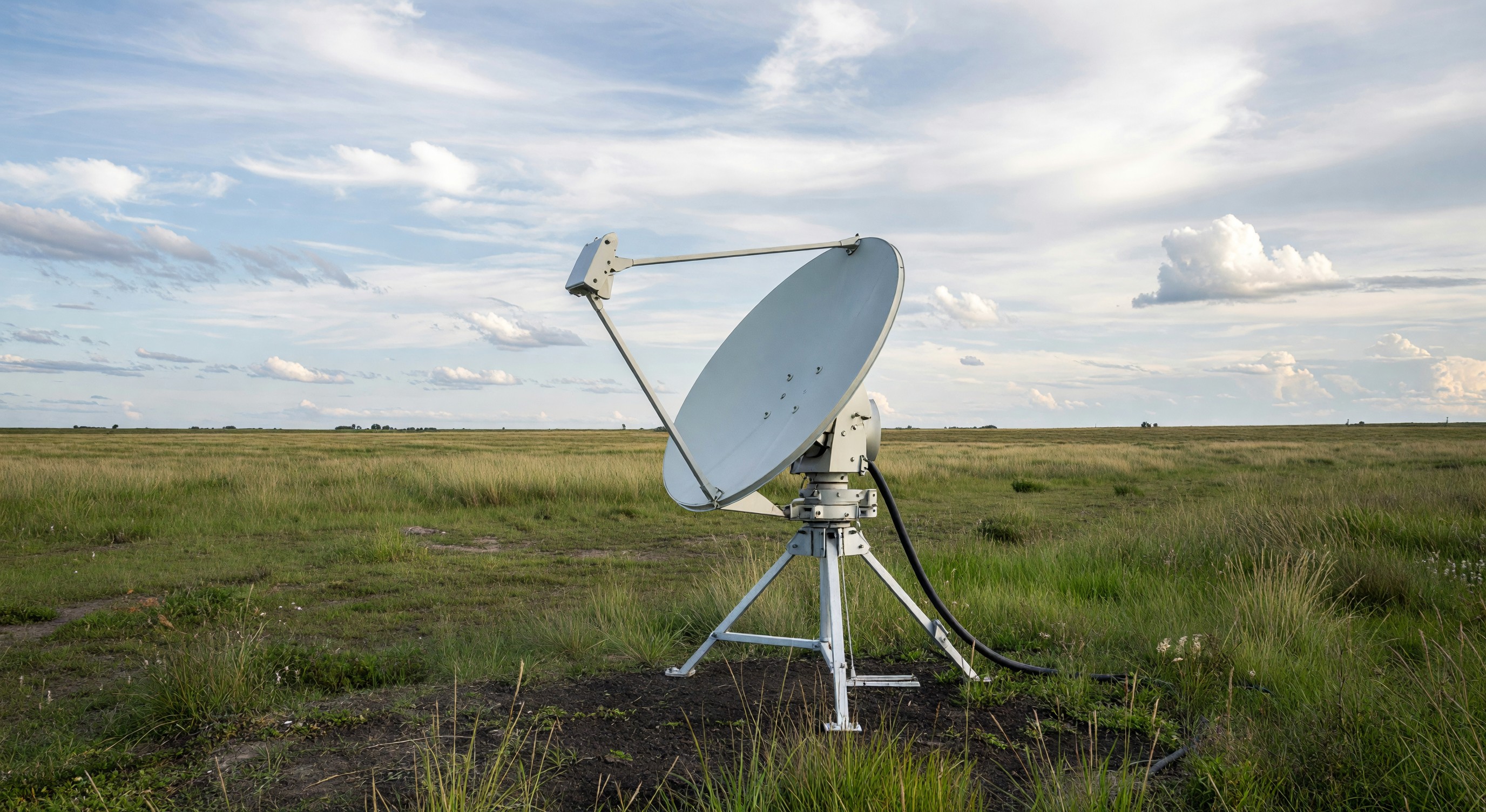
The ground terminal has been a critical variable. The original Starlink dish required careful installation and was too expensive for mass consumer adoption in many markets. Subsequent hardware iterations brought the retail price of the flat-panel terminal down through progressive manufacturing improvements. By 2024, terminal costs remained a barrier in some international markets but had fallen to levels that enabled genuine consumer broadband competition in rural and suburban areas with poor wireline infrastructure.
Starlink’s financial position improved markedly as subscriber count grew — the service reportedly crossed operational profitability on a unit economics basis, though SpaceX’s overall financial picture includes substantial investment in Starship development that is separate from Starlink’s operational performance.
Amazon Kuiper’s Deployment Timeline
Amazon announced Project Kuiper in 2019 with a plan for a 3,236-satellite LEO constellation. The program was slower to reach deployment than Starlink, with prototype satellites launched in 2023 and volume production deployment beginning in 2024.
Amazon received FCC authorization for the full constellation and has publicly committed to deployment milestones under the FCC’s non-geostationary orbit license requirements. The company has secured launch capacity from multiple providers — ULA’s Atlas V and Vulcan Centaur, Arianespace’s Ariane 6, and Amazon’s own Blue Origin New Glenn — in a diversified approach that reduces dependence on any single launch provider. Amazon notably did not sign with SpaceX for Kuiper launches, reflecting the competitive relationship between the two companies.
The satellite design emphasizes different technical choices than Starlink’s. Amazon has been less public about the specifics of Kuiper’s inter-satellite link implementation, its spectrum approach, and its terminal design, but the company’s deep expertise in cloud infrastructure suggests a service architecture oriented around integration with Amazon Web Services — positioning Kuiper as a connectivity layer for enterprise, government, and IoT applications alongside consumer broadband.
Amazon has described target terminal costs in the range of $400 or below at volume, competitive with Starlink’s retail terminal pricing. Achieving that at production scale requires semiconductor and antenna supply chain relationships that Amazon has been investing in, but has not yet demonstrated in volume deployment context.
How the Competitive Dynamics Actually Work
The satellite broadband market has structural characteristics that favor concentration.
First, spectrum. The available frequency bands for LEO broadband — primarily Ku and Ka — can support multiple operators in principle, but not unlimited ones. The FCC’s milestone requirements force real deployment choices, and the spectrum coordination framework gives earlier-deployed operators structural advantages. Starlink’s years-earlier deployment gives it a position in the spectrum coordination queue that Kuiper must work around.
Second, launch economics. Starlink has the structural advantage of launching on Falcon 9 and, eventually, Starship — vehicles whose incremental launch costs to SpaceX are below market rate because the launches are essentially internal. Each Starlink launch is not charged at market rate to SpaceX’s space operations division. Kuiper must pay for launches, and while its diversified manifest gives it some negotiating position, it cannot match Starlink’s internal pricing.
Third, subscriber base density. LEO broadband economics benefit from geographic density — more subscribers in a region means more revenue per satellite pass, better utilization of ground station capacity, and more data for network optimization. Starlink’s multi-year head start on subscriber acquisition means it reaches density thresholds faster in each new market it enters.
Against these structural disadvantages, Kuiper brings Amazon’s distribution infrastructure, its brand recognition in logistics and e-commerce markets, and the potential for bundling satellite connectivity with other Amazon services. Whether those advantages translate into consumer subscriber acquisition at scale remains to be seen.
Other Competitors and the Viability Question
Beyond the two leading systems, several other LEO broadband ventures have attempted to reach commercialization with varying success.
OneWeb, now Eutelsat OneWeb following a merger with the French satellite operator, operates a smaller first-generation constellation with an enterprise and government focus. The Eutelsat combination provides a GEO satellite operator’s existing customer base and ground infrastructure, but the business faces the difficulty of competing against both Starlink’s consumer service and Kuiper’s eventual enterprise positioning with a constellation that is smaller and technically earlier-generation than either.
Telesat Lightspeed, the LEO system planned by Canadian satellite operator Telesat, has faced financing challenges that have pushed its deployment timeline repeatedly. The Canadian government’s investment in the program reflects the national interest in domestic satellite connectivity, but the path to commercial deployment has been difficult.
The common challenge for smaller LEO broadband aspirants is the financing gap between the cost of building a commercially viable constellation — generally in the billions of dollars — and the revenue that a small subscriber base generates. Starlink’s scale advantages compound as it grows. Competing effectively against a mature Starlink system with millions of subscribers requires either a differentiated service proposition (enterprise focus, military capability, regional exclusivity) or a level of capitalization that few organizations can sustain.
What Competition Means for Customers and the Broader Industry
The emergence of a credible Kuiper competitor changes the market in several ways that matter beyond the two companies themselves.
For enterprise and government customers — aviation, maritime, remote operations, rural cellular backhaul — the existence of two credible providers enables real procurement competition. Long-term contracts negotiated when Starlink was the only serious LEO broadband option can be renegotiated or repriced when Kuiper enters a market. Customers with technical requirements that Starlink’s service design doesn’t fully address (certain latency bands, specific security characteristics, integration requirements) now have an alternative to evaluate.
For the launch market, Kuiper’s multi-launch-provider strategy matters. The constellation’s launch demand is distributed across Vulcan Centaur, Ariane 6, and New Glenn — providing meaningful revenue for ULA, Arianespace, and Blue Origin that they would otherwise not have. This helps sustain those providers’ operational tempo and financial health during the early years of Vulcan and New Glenn’s service ramps.
For the spectrum regime, two large, active deployments create more real-world precedent for how LEO broadband spectrum sharing works in practice, which informs the FCC’s and ITU’s ongoing rule development. The technical outcomes of Starlink-Kuiper coordination in spectrum-sharing scenarios will feed regulatory proceedings that affect the entire satellite industry for years.
The Timeline That Matters
The next 18–24 months are likely to define whether Kuiper becomes a genuine competitor at scale or consolidates into a specialized enterprise niche.
Kuiper needs to demonstrate service performance that is competitive with Starlink’s mature network, terminal availability at price points that enable consumer adoption, and customer acquisition in geographies where the first-mover advantage has not yet hardened into brand loyalty. It also needs to meet its FCC deployment milestones, which require a specified fraction of the authorized constellation in orbit on a defined schedule.
Starlink, for its part, is not standing still. Its Gen 2 full-size satellite deployments via Starship, when they begin at scale, would dramatically increase the network’s capacity and potentially reduce per-bit costs further. The competitive gap that exists in late 2024 between a mature Starlink and an early-deployment Kuiper may widen before it narrows.
Frequently Asked Questions
How many subscribers does Starlink have?
SpaceX has not published precise subscriber figures consistently, but industry estimates as of late 2024 placed Starlink’s customer base in the range of several million across residential, maritime, aviation, and enterprise segments. SpaceX has disclosed subscriber milestones periodically, with the service available in over 100 countries.
When will Kuiper service be available to consumers?
Amazon has stated plans to begin customer service in 2025, with volume commercial availability dependent on meeting deployment milestones. Beta service to specific customer segments was planned for earlier rollout as sufficient satellites reach operational orbit.
Can the LEO broadband market support more than two large operators?
The structural economics — spectrum position, launch cost advantages, subscriber density effects — favor consolidation around two or three large operators globally, with regional operators potentially serving specific geographies or market verticals. The market is unlikely to sustain many operators at full-scale constellation deployment.
How does Kuiper’s spectrum access compare to Starlink’s?
Kuiper holds FCC licenses for the frequency bands its constellation uses, with the coordination requirements that apply to non-geostationary systems. Starlink’s earlier deployment gives it coordination priority in some spectrum scenarios, which Kuiper’s network design must account for. The specific coordination arrangements are subject to ongoing FCC proceedings.
What is the realistic terminal cost for consumer satellite broadband?
Starlink’s consumer terminal was retailing at roughly $300–$600 depending on the hardware generation and regional market as of 2024. Amazon has targeted below $400 for Kuiper terminals at volume production. Both figures are above what would be required for mass consumer adoption in price-sensitive emerging markets, which is a persistent barrier to serving the global connectivity gap.
Are there security concerns with satellite broadband services?
Military and intelligence communities have analyzed the security characteristics of commercial LEO broadband for sensitive applications. The services are generally unsuitable for classified traffic without additional encryption layers. For unclassified enterprise use, the security characteristics are broadly comparable to other broadband services, with the additional consideration that LEO broadband ground terminals and uplink locations can potentially be geolocated through radio frequency detection methods.
Further Reading from Authoritative Sources
- FCC Space Bureau — Non-Geostationary Satellite Orbit Systems — the FCC’s Space Bureau maintains the licensing records, milestone tracking, and proceeding documents for all authorized non-geostationary satellite constellation operators including Starlink and Project Kuiper.
- NASA Space Communications and Navigation — Commercial LEO Overview — NASA’s space communications program tracks commercial LEO constellation development as context for NASA’s own relay and communications architecture decisions.