Among the technical prerequisites for a crewed Artemis lunar landing, no single demonstration carries more schedule risk than SpaceX’s Starship propellant transfer capability. Without on-orbit refueling, the Starship Human Landing System cannot reach the Moon. Without a demonstrated refueling capability — not just a paper design, but a flight-tested, NASA-certified system — no crewed lunar landing can be scheduled with credibility.
As of mid-2026, neither the full ship-to-ship demonstration mission nor the associated NASA design certification review had occurred. SpaceX had originally targeted March 2025 for the start of the propellant transfer flight test campaign. That milestone came and went. The company’s subsequent June 2026 target has itself slipped to later in 2026: the mission has cleared a flight system review of the overall architecture and key subsystems, but the docking-and-transfer flight itself remains pending. Whether that later-2026 window holds will determine whether Artemis III’s 2027 schedule and any prospect of a 2028 crewed lunar landing remain technically coherent.
Why HLS Starship Requires On-Orbit Refueling
The Starship vehicle that launches from Earth is not the Starship that lands on the Moon. The HLS variant — a modified Starship configured for lunar operations, with extended landing legs, a different hatch configuration, and interior accommodations for the descent to the surface — must be fueled in Earth orbit rather than at the launch pad.
The reason is fundamental to the rocket equation. A fully fueled Starship capable of reaching low Earth orbit carries approximately 1,200 metric tons of propellant in its upper stage — liquid oxygen and liquid methane. The propellant mass required to then depart Earth orbit for the Moon, decelerate into lunar orbit, and descend to the lunar surface far exceeds what the vehicle can carry when it launches atop Super Heavy. The energy budget for the cislunar mission requires the vehicle to be refueled after reaching orbit.
NASA’s current planning calls for approximately ten dedicated Starship tanker missions to transfer propellant to an orbital depot before the HLS vehicle launches or departs for the Moon. The tanker Starship variant carries propellant rather than payload, and transfers it to either an orbital depot vehicle or directly to the HLS. The number of required tanker flights — early estimates ranged from four to sixteen depending on boil-off assumptions and mission architecture details — remains a significant planning variable.
The Technical Challenges of Cryogenic Transfer in Microgravity
Transferring liquid propellant between spacecraft is not a new idea. The concept has been studied by NASA since the Apollo era and was examined extensively during the Constellation program. The reason it has never been operationally demonstrated at scale is not a lack of engineering theory — it is the difficulty of actually pumping cryogenic liquids in microgravity.
On Earth, gravity settles liquids to the bottom of a tank and keeps them separated from the ullage gas above. In microgravity, liquid propellant and ullage gas are distributed throughout the tank in an unpredictable mixture of droplets and vapor pockets. Before transfer can begin, the propellant must be settled against the tank wall — typically accomplished by briefly firing small thrusters to impose a low acceleration on the vehicle, pushing the liquid toward the aft end of the tank through what is called “propellant settling.”
Once settled, the transfer requires connecting the two vehicles via docking interfaces and pumping subcooled cryogens from one tank to the other while managing heat transfer, boil-off, and pressure differentials. The propellant lines and docking hardware must accommodate the cryogenic temperatures — liquid methane at approximately -161°C, liquid oxygen at approximately -183°C — without thermal bridging that would cause excessive boil-off in the lines themselves. SpaceX has incorporated vacuum-jacketed propellant lines and cryogenic quick-disconnect interfaces specifically for this mission.
Boil-off is the persistent enemy of stored cryogenic propellant. A Starship sitting in Earth orbit for the weeks required to accumulate ten tanker loads of propellant will lose significant propellant mass to boil-off from solar heating. The depot vehicle concept — a dedicated Starship configured as a long-duration storage vessel with enhanced thermal insulation — is intended to minimize boil-off during the accumulation period. The actual boil-off rates in orbit are not yet characterized by flight data; that characterization is among the objectives of the demonstration mission.
The Demonstration Mission Architecture
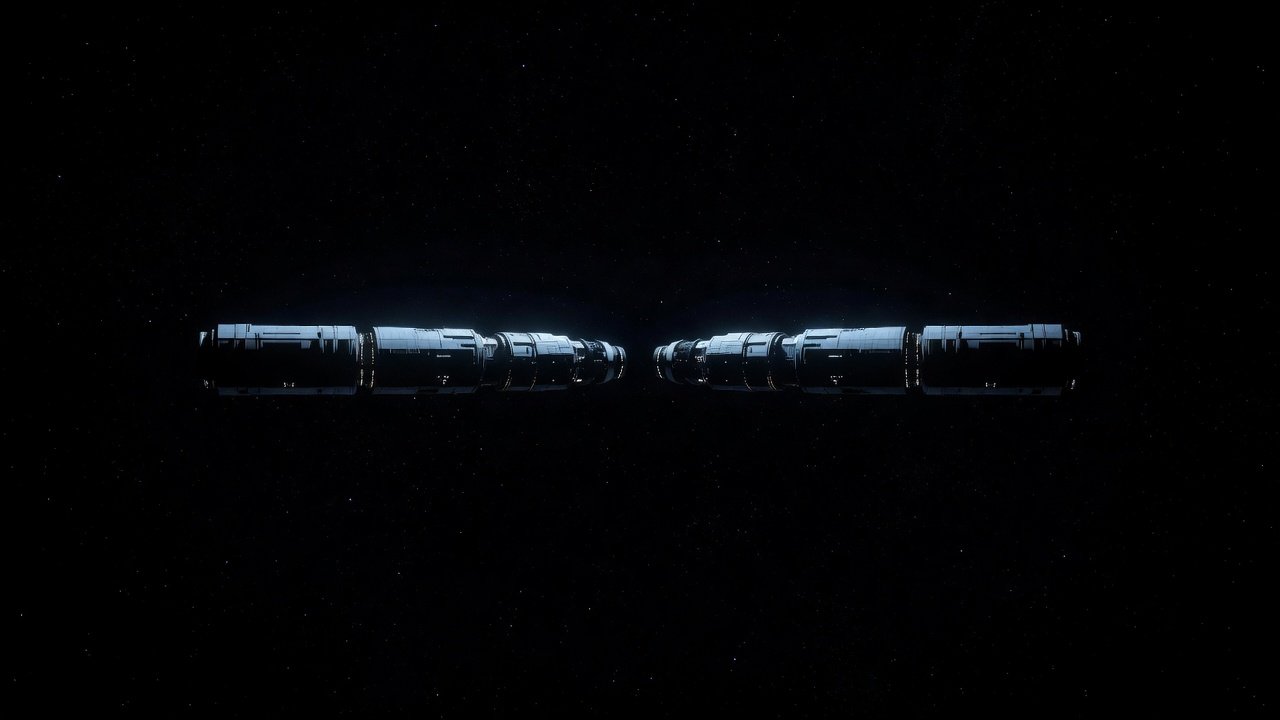
The propellant transfer demonstration is structured as a two-Starship mission. The first Starship launches from Starbase and enters orbit with a substantial propellant load, then begins a characterization period focused on understanding how cryogenic propellants behave in the vehicle’s tanks over an extended orbital dwell time. This provides the boil-off and thermal data that mission planners need to size the tanker fleet and plan the propellant accumulation schedule.
Three to four weeks after the first launch, a second Starship launches, rendezvous with the first vehicle, and conducts the actual propellant transfer — the ship-to-ship docking and cryogenic fluid transfer that is the primary demonstration objective. The two vehicles dock using laser-based relative navigation and the nose docking interface. The transfer pumps propellant from the chaser vehicle’s tanks to the target vehicle’s tanks.
A successful demonstration must meet several criteria: controlled docking in orbit, propellant settling without loss of vehicle control, successful cryogenic fluid transfer above a minimum quantity threshold, and data quality sufficient for NASA to conduct its design certification review. That review — the point at which NASA formally accepts the architecture as flight-ready — is the gateway event for HLS mission planning.
Schedule Slippage and Why It Matters for Artemis
In October 2024, NASA stated that the propellant transfer flight test campaign was planned to begin around March 2025 with completion over the summer, when the design certification review would take place. Neither occurred on that schedule. SpaceX’s subsequent June 2026 target for the first orbital refueling demonstration also slipped; as of mid-2026 the mission has passed its flight system review but the docking-and-transfer flight is now expected later in 2026, which would still place the design certification review in late 2026 or early 2027 at the earliest.
The downstream implications are straightforward. Artemis III, now restructured as an Earth-orbit HLS rendezvous and qualification mission rather than a lunar landing, does not itself require the propellant transfer system to be certified — it tests the Orion-HLS interface and the AxEMU spacesuit in Earth orbit, building on what Artemis II already demonstrated about crewed operations at lunar distance. But the mission that comes after, Artemis IV — currently the first candidate for a crewed lunar landing — cannot be scheduled with confidence until the propellant transfer architecture is certified.
If the later-2026 demo target holds and the certification review completes in late 2026 or early 2027, a 2028 lunar landing remains arithmetically possible. If the demo slips further into 2027, the certification review likely follows into 2027 or 2028, pushing the first crewed lunar landing beyond 2028. SpaceX has publicly stated the company targets a crewed lunar landing in September 2028 under its current timeline; aerospace program history — including this same demonstration’s repeated slippage from its original March 2025 target — suggests operator-announced schedule targets should be treated as aspirational until demonstrated.
The Broader Significance of Cryogenic Orbital Transfer
Beyond the Artemis program, successfully demonstrating on-orbit propellant transfer would open an architectural option that has been theoretically available for decades: treating Earth orbit as a waystation where vehicles are assembled and fueled rather than a single-launch barrier that constrains every mission’s design to what fits on one rocket.
SpaceX’s internal Mars architecture depends on on-orbit refueling even more fundamentally than Artemis does — a Starship carrying crew to Mars requires multiple tanker loads in orbit before the trans-Mars injection burn. Other launch operators and defense customers have discussed propellant depot architectures for various applications. The demonstration’s implications extend well past the Artemis program’s immediate schedule.
An uncrewed lunar landing by a Starship HLS variant is SpaceX’s stated precursor to the crewed Artemis missions, with that uncrewed mission targeted for June 2027. Whether that mission occurs as planned will be the first operational test of the propellant transfer architecture at the scale the Artemis mission profile requires.
Frequently Asked Questions
Why does Starship need to refuel in orbit to reach the Moon?
A Starship launching from Earth expends most of its propellant reaching low Earth orbit. Reaching the Moon, entering lunar orbit, and descending to the surface requires far more propellant than the vehicle can carry at launch, so the HLS variant must be refueled in orbit — via roughly ten dedicated tanker flights — before departing for the Moon.
What has caused the propellant transfer demo to slip repeatedly?
SpaceX originally targeted March 2025 for the start of flight testing; that slipped to a June 2026 target, which has itself moved to later in 2026. The mission has passed a flight system review of its architecture and subsystems, but the technically demanding docking-and-transfer flight — settling cryogenic propellant in microgravity and pumping it between two vehicles — remains ahead.
How many tanker flights does the Starship HLS require?
NASA’s planning has called for approximately ten dedicated Starship tanker missions to fill an orbital propellant depot before an HLS vehicle can depart for the Moon, though early estimates ranged from four to sixteen flights depending on boil-off assumptions and mission architecture details still being refined.
What does the demonstration mission actually involve?
A “target” Starship launches first and spends weeks in orbit generating boil-off and thermal-performance data. Three to four weeks later, a “chaser” Starship launches, docks with the first vehicle using laser-based relative navigation, and transfers cryogenic propellant through vacuum-jacketed lines and quick-disconnect interfaces — the mission’s primary technical objective.
Does the propellant transfer delay affect Artemis III?
Not directly. Artemis III has been restructured into an Earth-orbit HLS qualification flight that doesn’t require certified propellant transfer. But Artemis IV, the first mission planned to actually land crew on the Moon, cannot be scheduled with confidence until the propellant transfer architecture completes NASA’s design certification review.
Further Reading from Authoritative Sources
- NASA — Starship HLS Program Page — NASA’s human landing system page including program history and current contractor arrangements.
- FAA Office of Commercial Space Transportation — the regulatory authority for commercial launch licensing covers Starship’s launch activities and the safety framework for the propellant transfer demonstrations.
- NASA FAQ — Artemis Campaign Updates — official FAQ on program restructuring and the revised mission sequence.